
Can low-nose rhinoplasty also correct a deviated septum? — how implant choice and the columellar-labial angle get judged
2025. 3. 13.
In low-nose rhinoplasty — the difference between using an implant and not, what changes deviated-septum correction done together can bring, plus a customized nasal implant and columellar-labial angle tidying — organized through an actual case.

Key points
- A nose can look low for several reasons — a low glabella, a drooping-looking tip — so what to raise gets distinguished first.
- With an implant, a direction raising bridge and tip in balance can be planned; without one, a direction adjusting the tip to look perky against the original bridge height can be planned.
- If a deviated septum makes the nose look bent, deviation correction can proceed together with low-nose surgery, and relief of breathing discomfort like nasal congestion can be expected.
"My nose is low — and it also looks bent. Can both be solved at once?"
Among people looking into low-nose surgery, some only worry about bridge height, but many also worry about a bent-looking nose or a rounded bulbous tip together. Based on an actual case where low-nose surgery and deviated septum correction were done together, this article organizes how implant choice and the columellar-labial angle get judged.
01
Why does a low nose get its cause distinguished first?
There's more than one reason a nose looks low. Sometimes the glabella is low; sometimes the tip looks drooped, giving an overall low impression. Many people with a low nose also worry about a rounded bulbous tip.
Since the position and method of raising differ by cause, low-nose surgery first distinguishes "where does it look low" before "how much to raise."
02
What differs between using an implant and not?
In low-nose surgery, the plannable direction differs by whether an implant is used.
| Category | Plannable direction |
|---|---|
| Using an implant | Bridge and tip can be raised in balance |
| Not using an implant | Adjust the tip to look perky against the original bridge height |
Whether and which implant to use is left to the patient's choice. If unsure which suits, it can be checked together in consultation based on the current nose state. Each material's characteristics can be seen in more detail in the rhinoplasty materials guide.
03
How did the actual case proceed?
This patient had a low nose plus a deviated septum, so the nose looked bent externally too. Surgery was planned as follows.
- Nose height — septal and ear cartilage were grafted to raise the nose.
- The bent-looking nose — deviated septum correction was done together.
- The bridge — a customized nasal implant rather than a generic I-shape was used.
- Raise the whole nose from bridge to tip.
- Form a balanced columellar-labial angle.
When the nose is bent, breathing discomfort like nasal congestion or rhinitis can occur — deviated septum correction can ease it. An effect of the mouth looking less protrusive can also be expected.
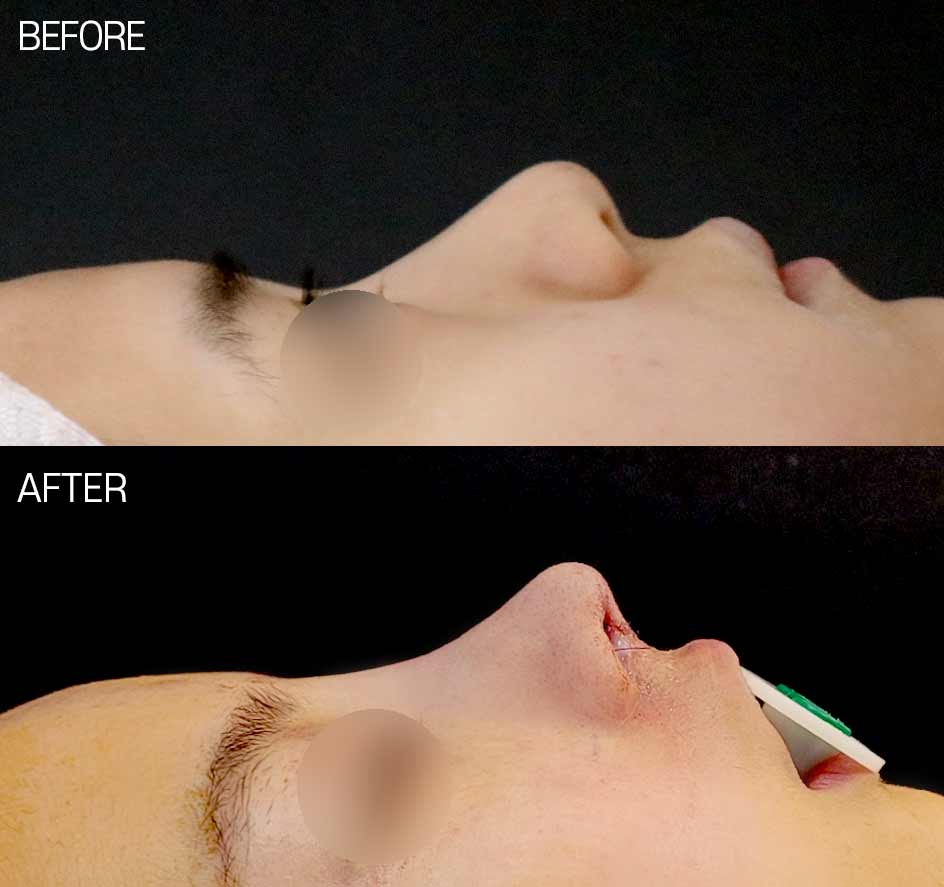
After surgery, the bumpy bridge was tidied smooth, and the columellar-labial angle was tidied so the sunken-looking part improved. It was low-nose surgery combining several procedures to improve the overall nose shape.
In summary, two characteristics of low-nose surgery can be seen in this case.
04
Summary — height and function get read together
Low-nose surgery isn't only a matter of bridge height. The reason the nose looks low gets distinguished; if it looks bent, deviated septum correction can be planned together; and whether and which implant to use varies with the patient's state and choice. If you have questions, please check comfortably through consultation.
If curious which direction is possible for your nose's current state, you can confirm in a 1:1 video consultation. Actual cases can be seen in the before & after photos.

Frequently asked questions
Answers to common questions patients ask before a consultation.
Can low-nose surgery and deviated septum correction be done at once?
Is an implant mandatory in low-nose surgery?
How does a customized nasal implant differ from a generic one?
Responses to treatment and recovery progress vary by individual. Outcomes and side effects vary from person to person. Bleeding, infection, swelling and asymmetry may occur. Please consult our medical team before making a decision.